

How Prayer Changes Your Brain is something both neuroscience and Scripture are beginning to reveal in remarkable ways. For centuries, believers have understood prayer as a powerful spiritual practice that brings peace, strength, and closeness with God. Today, scientific research is also showing that consistent prayer may positively affect the brain, emotional health, stress levels, and mental resilience.
What if one of the most powerful habits for your mental and emotional health was discovered thousands of years ago?
For centuries, prayer has been viewed as a deeply spiritual practice—a sacred way to connect with God, seek guidance, and find peace in difficult moments. But modern neuroscience is now uncovering something remarkable: prayer may also have measurable effects on the brain.
Researchers in the growing field of neurotheology—the study of spirituality and the brain—have found that focused prayer and meditation can influence emotional regulation, stress levels, attention, compassion, and overall mental well-being. Every time you intentionally quiet your mind and turn your attention toward God, your brain begins responding through a process known as neuroplasticity—the brain’s ability to reorganize and strengthen neural pathways over time.
In many ways, science is beginning to echo what Scripture has taught for generations:
“Do not conform to the pattern of this world, but be transformed by the renewing of your mind.” — Romans 12:2 (NIV)
Neuroscientists like Dr. Andrew Newberg have spent years studying how prayer affects brain activity. His research suggests that consistent spiritual practices may strengthen areas connected to compassion, emotional awareness, and focus while helping calm regions associated with fear and anxiety. Some studies even suggest that as little as 12 minutes of focused prayer or meditation each day may positively influence brain function and emotional resilience over time.
In this article, we will explore the fascinating place where faith and neuroscience meet. You will discover which areas of the brain become active during prayer, how prayer may help reduce stress and anxiety, and why spending time with God could be one of the most powerful habits for building a peaceful, resilient, and emotionally healthy mind.
How Prayer Changes Your Brain Through Daily Renewal
🙏 Feeling Stuck? Get Your FREE Breakthrough Prayer Guide
Enter your email below and receive 7 powerful prayers for open doors.
No spam—only powerful prayers. Unsubscribe anytime.
Many Christians are surprised to learn how prayer changes your brain over time. Consistent prayer trains the mind to slow down, focus on God, and release anxious thinking. Through neuroplasticity, repeated spiritual habits can help strengthen healthier emotional and mental patterns.
Your Brain Was Created to Be Renewed
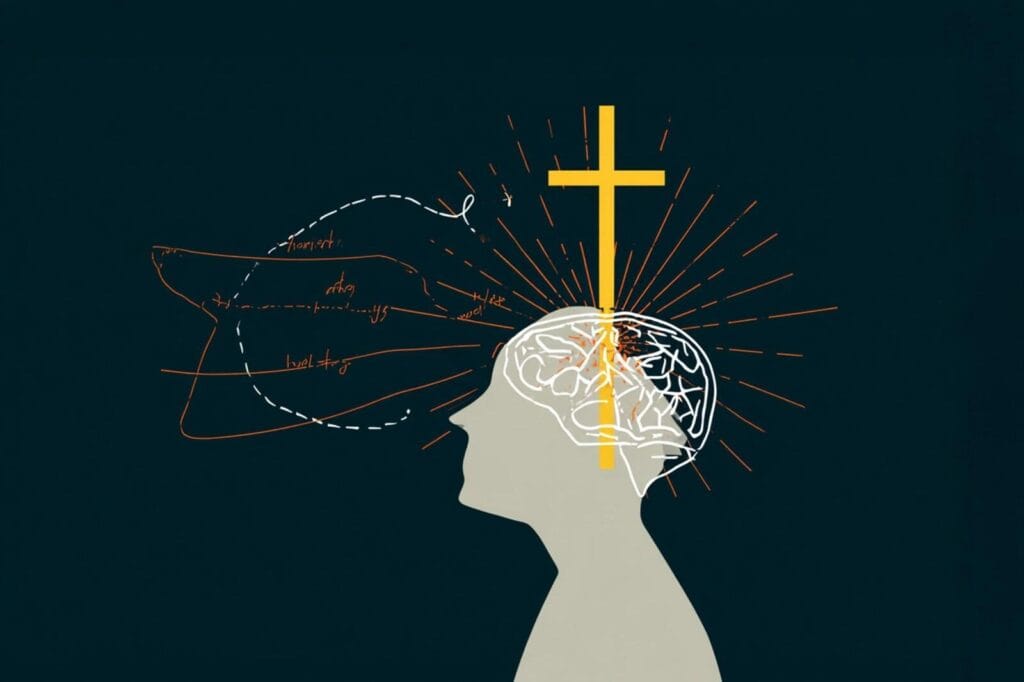
Every thought you think strengthens certain pathways in your brain. This process is called neuroplasticity—the brain’s ability to reorganize and rewire itself based on repeated experiences and thought patterns.
Negative thinking, fear, anxiety, anger, and constant stress can strengthen unhealthy mental pathways. But focused prayer, gratitude, worship, and meditation on God’s Word can help build healthier emotional and cognitive patterns over time.
Neuroscientist Dr. Andrew Newberg, known for his work studying the brain during prayer and spiritual experiences, found that regular spiritual practices may strengthen areas connected to compassion, emotional awareness, and attention while helping calm fear and stress responses.
In simple terms: what you repeatedly focus on shapes your mind.
And when your mind is consistently focused on God, peace begins to replace panic.
The 12-Minute Rule: What Happens to Your Brain During Focused Prayer

In the world of neuroscience, the “12-minute rule” has become a landmark finding. Research shows that just 12 minutes of daily, focused prayer—where you are deeply engaged and intentional—is enough to begin physically altering the structure of your brain.
Here is exactly what happens under the “hood” during those twelve minutes:
1. The “Focus” Center Lights Up (Prefrontal Cortex)
Located right behind your forehead, the Prefrontal Cortex is responsible for attention, logic, and emotional regulation. When you pray, this area becomes highly active. Think of it as a workout for your concentration. Over time, this “thickens” the gray matter here, making it easier for you to stay focused, make better decisions, and keep your emotions from spiraling when life gets chaotic.
2. The “Fear Center” Calms Down (The Amygdala)
The amygdala is the brain’s “smoke detector”—it’s always looking for danger and triggers your “fight or flight” response. Constant stress keeps this area overactive. However, studies show that regular prayer reduces the size and activity of the amygdala. By talking to God, you are essentially telling your brain’s alarm system that it is safe to turn off.
3. The “Compassion Center” Grows (Anterior Cingulate)

This part of the brain is the seat of empathy and social connection. As you meditate on God’s love or pray for others, the Anterior Cingulate becomes more active. The result? You naturally become more patient, more empathetic, and less likely to hold onto bitterness. Prayer literally makes you a “softer” person toward others while making you “tougher” against stress.
4. The “Sense of Self” Shifts (Parietal Lobes)
Fascinatingly, during deep prayer, the Parietal Lobes (which handle your sense of time and physical boundaries) actually quiet down. This is why people often report feeling a sense of “oneness” with God or losing track of time while praying. It is a biological “ego-shift” that moves you from focusing on your own problems to focusing on God’s greatness.
The Takeaway: Consistency over Intensity
You don’t need to spend four hours on your knees to see these benefits. Neuroscience suggests that consistency is more important than length. Just like going to the gym, it’s the daily repetition of 12 minutes that builds the “spiritual muscle” in your brain.
How Prayer Changes Your Brain Through Neuroplasticity
While prayer is reshaping the structure of your brain, it is also triggering a powerful “chemical cocktail” that changes how you feel in real-time. Scientists have observed that spiritual practices initiate a flood of neurochemicals that act as natural mood stabilizers and stress-relievers.
Here are the three primary chemicals involved in the “God-Shift”:
1. Dopamine: The “Motivation” Molecule
Dopamine is often associated with reward and pleasure. When you engage in meaningful prayer—especially when focusing on gratitude or God’s promises—your brain releases dopamine. This provides a natural sense of motivation and mental energy. It’s why many people feel a “spiritual high” or a renewed sense of purpose after spending time in prayer.
2. Oxytocin: The “Bonding” Hormone
Known as the “cuddle hormone” or the “bonding molecule,” oxytocin is usually released during physical touch or social bonding. Neurotheology shows that prayer—specifically the kind where you visualize God as a loving, protective Father—triggers oxytocin. This creates a physiological feeling of safety, trust, and intimacy, lowering your blood pressure and making you feel “connected” rather than isolated.
3. Serotonin: The “Peace” Stabilizer
Serotonin is the brain’s natural antidepressant. It regulates your mood, sleep, and appetite. Engaging in repetitive, rhythmic prayer (like reciting a favorite Psalm or the Lord’s Prayer) has been shown to increase serotonin levels. This creates a state of “alert relaxation,” where you feel calm but mentally sharp, ready to handle the day’s challenges without being overwhelmed.
Why Understanding How Prayer Changes Your Brain Matters for Your Mental Health

Understanding how prayer changes your brain can encourage believers to become more intentional in their spiritual lives. Prayer is not only a spiritual discipline—it may also support emotional healing, mental clarity, resilience, and peace during difficult seasons.
In a world that often turns to artificial supplements to balance brain chemistry, prayer offers a biological reset from the inside out. By spending time in God’s presence, you aren’t just “thinking happy thoughts”—you are literally bathing your brain in chemicals designed to bring you peace and joy.
As 2 Timothy 1:7 puts it: “For God has not given us a spirit of fear, but of power and of love and of a sound mind.”
Science shows that a “sound mind” is one where these chemicals are in perfect balance—and prayer is the key that unlocks that balance.
Step-by-Step: The 12-Minute “Brain-Change” Prayer Habit
To experience the neuroplastic benefits we’ve discussed, consistency is key. You don’t need a theology degree; you just need twelve minutes and a quiet space. Here is a scientifically-backed and spiritually-rooted routine to help you rewire your brain for peace:
1. Minutes 1–3: The “Amygdala Reset” (Deep Breathing & Presence)
Start by sitting comfortably and taking slow, deep breaths. This physically signals your “fear center” (the amygdala) to stand down.
- The Action: Focus solely on your breath. Acknowledge that God is present in the room with you.
- The Verse: “Be still, and know that I am God.” (Psalm 46:10)
2 .Minutes 4–7: The “Dopamine Boost” (Gratitude)
Shift your focus to specific things you are thankful for. Science shows that gratitude is the fastest way to trigger a dopamine release.
- The Action: Name five specific blessings from the last 24 hours. Don’t just list them; feel the appreciation for them.
- The Verse: “Enter his gates with thanksgiving and his courts with praise.” (Psalm 100:4)
3. Minutes 8–10: The “Compassion Center” Workout (Intercession)
Pray for others—especially those you might be struggling to forgive. This activates the anterior cingulate (the empathy center).
- The Action: Lift up a friend, a family member, and even an “enemy” by name. Ask for God’s best for them.
- The Verse: “Blessed are the merciful, for they shall receive mercy.” (Matthew 5:7)
4. Minutes 11–12: The “Sound Mind” Seal (Affirmation)
End by speaking God’s promises over your identity. This reinforces the neural pathways of “power, love, and a sound mind.”
- The Action: Declare out loud: “I have the mind of Christ. I am loved. I am at peace.”
- The Verse: “For God has not given us a spirit of fear, but of power and of love and of a sound mind.” (2 Timothy 1:7)
Before we pray, remember this: understanding how prayer changes your brain is a powerful reminder that God cares not only about your spirit, but also about your mind, emotions, peace, and daily struggles.
A Prayer for Peace, Mental Strength, and Renewal

Heavenly Father,
Thank You for creating us with minds that can be renewed through Your presence and Your truth. In a world filled with anxiety, fear, stress, and emotional exhaustion, we thank You that You are still the God who gives peace that surpasses all understanding.
Lord, quiet every storm inside us today.
Where there is fear, release Your peace.
Where there is anxiety, release Your comfort.
Where there is mental exhaustion, release new strength.
Where there are negative thoughts, renew our minds with Your truth.
Father, help us to bring every worry, burden, and hidden struggle before You in prayer instead of carrying it alone. Teach us to trust You more deeply each day.
Your Word says in Philippians 4:6-7 NIV that when we pray instead of worrying, Your peace guards our hearts and minds in Christ Jesus. Today, we receive that peace.
We pray against every spirit of fear, panic, confusion, emotional heaviness, and mental oppression. Replace fear with faith. Replace chaos with calmness. Replace despair with hope.
Lord, transform our thinking according to Romans 12:2 NIV. Renew our minds daily through prayer, worship, and Your Word. Help us focus on what is true, pure, lovely, and life-giving.
We declare that our minds belong to You.
Our thoughts belong to You.
Our future belongs to You.
Thank You for being near to us in every battle. Even when we cannot see immediate change, help us trust that You are working within us—bringing healing, peace, wisdom, and emotional restoration.
In Jesus’ mighty name,
Amen.
frequently Asked Questions About How Prayer Changes Your Brain
Q: Do I have to be a “spiritual giant” for my brain to change?
A: Not at all. Neuroscience shows that the brain responds to the frequency and intention of the activity, not your level of theological knowledge. Whether you are a lifelong believer or just starting out, your prefrontal cortex will respond to the exercise of focused prayer.
Q: Does it matter what kind of prayer I do?
A: Yes, to an extent. Research suggests that contemplative prayer (focusing on God’s love and character) has a more positive impact on the brain’s “compassion center” than “petition-only” prayer (only asking for things). A balance of gratitude and meditation on Scripture yields the best results.
Q: Can prayer really help with clinical anxiety or depression?
A: While prayer is not a substitute for professional medical treatment, it is a powerful supplementary tool. By shrinking the amygdala’s sensitivity and boosting serotonin, prayer provides a biological “calm” that can make traditional therapy and medicine even more effective.
Q: Why 12 minutes? Why not 5 or 20?
A: Dr. Andrew Newberg’s studies identified 12 minutes as the “tipping point” where the brain stays focused long enough to begin the structural shifting of neuroplasticity. Think of it like the “effective dose” in medicine.
Q: What if my mind wanders while I pray? Does it still count?
A: Actually, the act of bringing your focus back to God when your mind wanders is the “heavy lifting” that strengthens your prefrontal cortex. Don’t get discouraged by distractions—every time you refocus, you are “doing a rep” for your brain health.
Q: Is “meditation” the same as “prayer” for the brain?
A: They share many of the same biological benefits (like lowering stress), but prayer adds the “Relational Element.” Releasing oxytocin (the bonding hormone) requires a sense of connection to a person. Therefore, praying to a personal God provides a unique “safety” chemical that secular meditation often lacks.
Conclusion: You Are Wired for Worship
The intersection of neuroscience and faith reveals a beautiful truth: You weren’t just “meant” to pray; you were physically built to do it. Prayer isn’t a chore to check off a list—it is a biological necessity for a healthy, resilient life.
When you commit to these 12 minutes, you aren’t just changing your schedule; you are changing your biology. You are shrinking your fear, expanding your compassion, and bathing your brain in the peace that passes all understanding. Today, don’t just pray because you “should”—pray because you want to experience the total renewal of your mind.
In conclusion, understanding how prayer changes your brain reminds us that time spent with God is never wasted—it renews the mind, calms fear, strengthens emotional resilience, and draws us closer to His peace and presence every day.
Continue Growing in Your Faith
Prayer is not just a religious routine—it is a daily invitation to renew your mind, strengthen your spirit, and draw closer to God. The more consistently you spend time in prayer and God’s Word, the more peace, wisdom, and spiritual strength begin to shape your life from the inside out.
If this article encouraged you, continue growing deeper in your faith with these powerful resources on Jesus The Way Daily:
- Read: Powerful Prayers For Anxiety And Stress Relief
- Read: Morning Prayers For Strength And Peace
- Read: Bible Verses About Peace In Hard Times
- Read: How To Hear God’s Voice Clearly
- Read: Devotional For Today: Trusting God In Difficult Seasons
No matter what you are facing today, remember this: God is not distant from your struggles. He cares about your mind, your emotions, your healing, and your future. Every prayer matters. Every moment spent with Him is changing you—spiritually, emotionally, and even mentally.
Keep praying. Keep trusting. Keep renewing your mind through God’s presence and His Word.